
JournalAugust 18, 2026
Questions to Ask Family Before Writing a Tribute
If you have been asked to write the tribute, you do not have to remember everything alone. The right questions, asked gently, will bring back more than you expect.
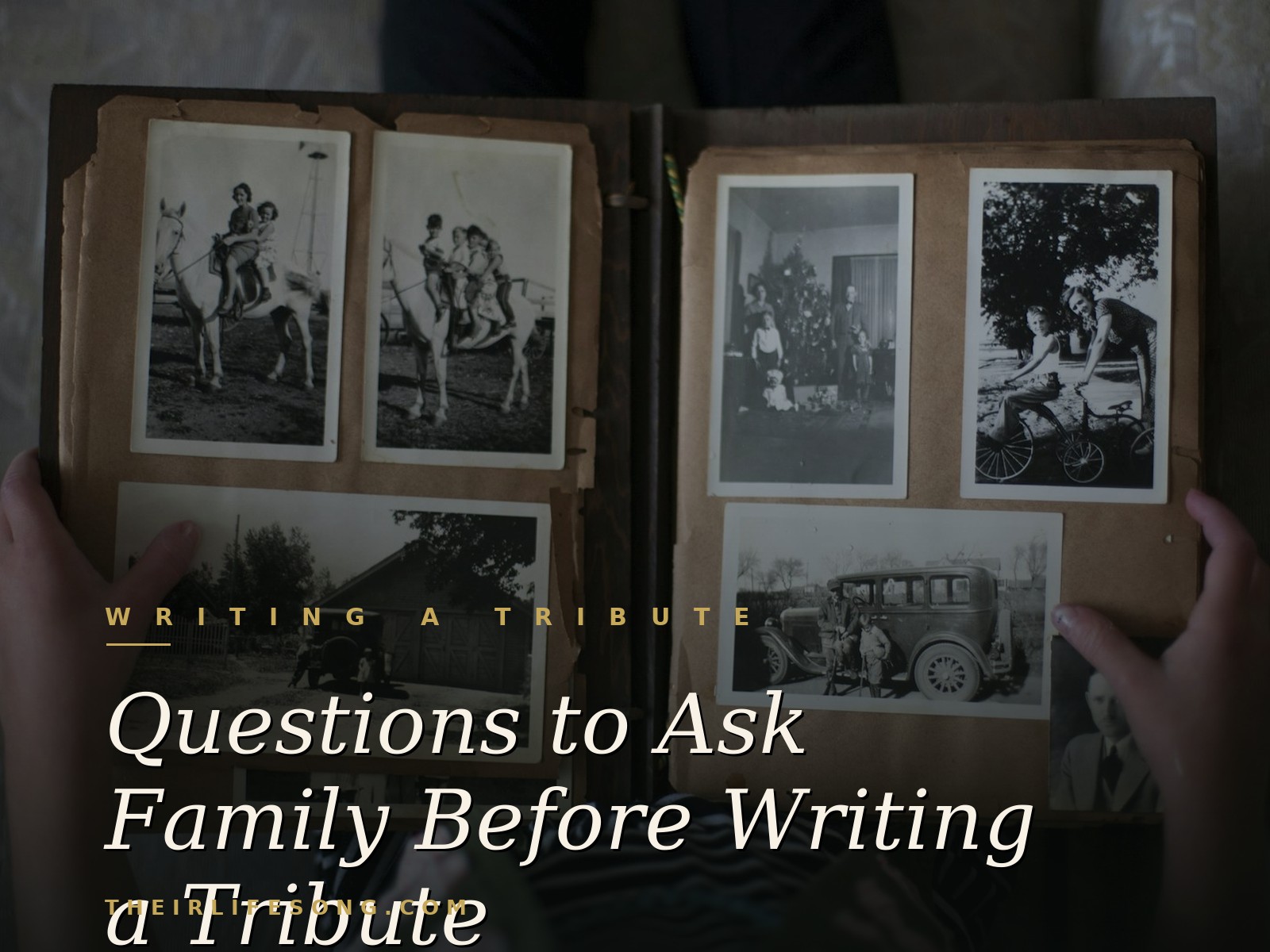
If you have been asked to write the eulogy, the obituary, or a few words for the memorial folder, you may be sitting with a blank page and the uneasy feeling that you are the wrong person for it. You are not. You just do not have all of the story yet — no one person ever does.
The good news is that you do not have to invent anything. Almost everything you need is already sitting in the memories of the people around you. Your job is mostly to ask, and then to listen well enough to catch the details that matter.
Here are the questions worth asking, and a few notes on how to ask them while everyone is still tender.
Start with questions that open doors
Broad questions like "what was she like?" usually get broad answers: kind, generous, always there. True, but not yet usable. Specific questions get you stories, and stories are what people actually remember from a tribute.
- What is the first memory of them that comes to mind — not the most important one, just the first?
- What did they always say? Was there a phrase the family could finish for them?
- What was a normal Tuesday like for them?
- What made them laugh until they could not talk?
- If you could hear their voice again for thirty seconds, what would they be saying?
That last one tends to open something. Be ready to give it room.
Questions about the ordinary days
Tributes often reach for the big milestones — the wedding, the promotion, the move across the country. But what people miss is usually smaller than that. The coffee mug. The route they always drove. The way they answered the phone.
- What did their kitchen or workshop or garden look like?
- What were they good at that nobody outside the family would know about?
- What did they always order? What would they never eat?
- What music was playing in their car or their house?
- What did they do on a Saturday morning when nothing was scheduled?
Questions about the people they loved
Nobody exists alone, and a tribute that only describes one person can feel oddly weightless. Ask about the relationships and you will usually find the character.
- How did they meet their spouse, and how did they tell that story?
- What were they like as a parent, a grandparent, a sibling, a friend?
- Who did they call when something went wrong? Who called them?
- Was there someone they quietly took care of that others might not know about?
- What did their faith, if they had one, look like day to day?
Questions about the harder parts
You do not have to include everything you hear. But asking about the difficult chapters often produces the truest material, and leaving them out entirely can make a tribute feel like it is describing a stranger.
- What did they have to get through that they did not talk about much?
- What were they stubborn about?
- What did they change their mind about over the years?
- What would they have wanted said out loud, and what would have embarrassed them?
That last question is a useful compass. If three people independently say "he would have hated a fuss," you have learned something about how to write the whole piece.
How to ask while everyone is grieving
Ask one person at a time if you can. Group conversations tend to produce agreement rather than memory, and the quietest person in the room often holds the best detail.
Give people a heads-up — "I am writing something for Saturday, can I ask you a few things about Dad this week?" — so they are not caught off guard. Ask permission before recording, then record if they say yes, because you will not be able to take notes and listen at the same time.
Let silence sit. People almost always add something after the pause, and it is usually the part they were deciding whether to say. And if someone starts crying, you have not done anything wrong. You have just reached something real.
What to do with the answers
Do not try to fit everything in. Read back through what you gathered and look for the details that repeat — the same phrase from four different people, the same trait told through four different stories. Those repetitions are the shape of the person, and they belong near the center of what you write.
Keep the rest. The stories that do not fit the eulogy often find a home somewhere else: the obituary, the memorial folder, a letter to a grandchild who is too young to remember, a slideshow, a song. At Their Life Song, the answers families gather to these same questions are what we build an original memorial song from — so if you find yourself with far more than one tribute can hold, it does not have to go to waste.
However you use them, the asking itself is worth doing. Families frequently say afterward that these conversations were the part of the week they were most glad they did not skip.